

The Heart Behind "Rebecca Sue"
Rebecca Sue is the untold story behind one of New York Times bestselling author Kathleen Norris’ deeply personal relationships. Best known for her insightful and poignant reflections on faith and life, Norris steps into uncharted territory by sharing an intimate memoir exploring the life of her younger sister Becky. Born with perinatal hypoxia, Becky's life was shaped by physical and mental disabilities, yet her spirit and resilience illuminate the hidden power of faith, family, and love.
With Norris's signature blend of poetic prose, spiritual reflection, and heartfelt storytelling, Rebecca Sue invites readers into a profoundly moving narrative, a tender tribute to Becky's intelligence, her struggles, and her extraordinary ability to inspire those around her. Through Becky, Norris examines the strength of familial bonds, the complexity of emotional and practical caregiving, and the myriad ways God works in our lives—seen and unseen.
Keep reading to hear from Kathleen on her heart behind writing Rebecca Sue.
On Writing Rebecca Sue
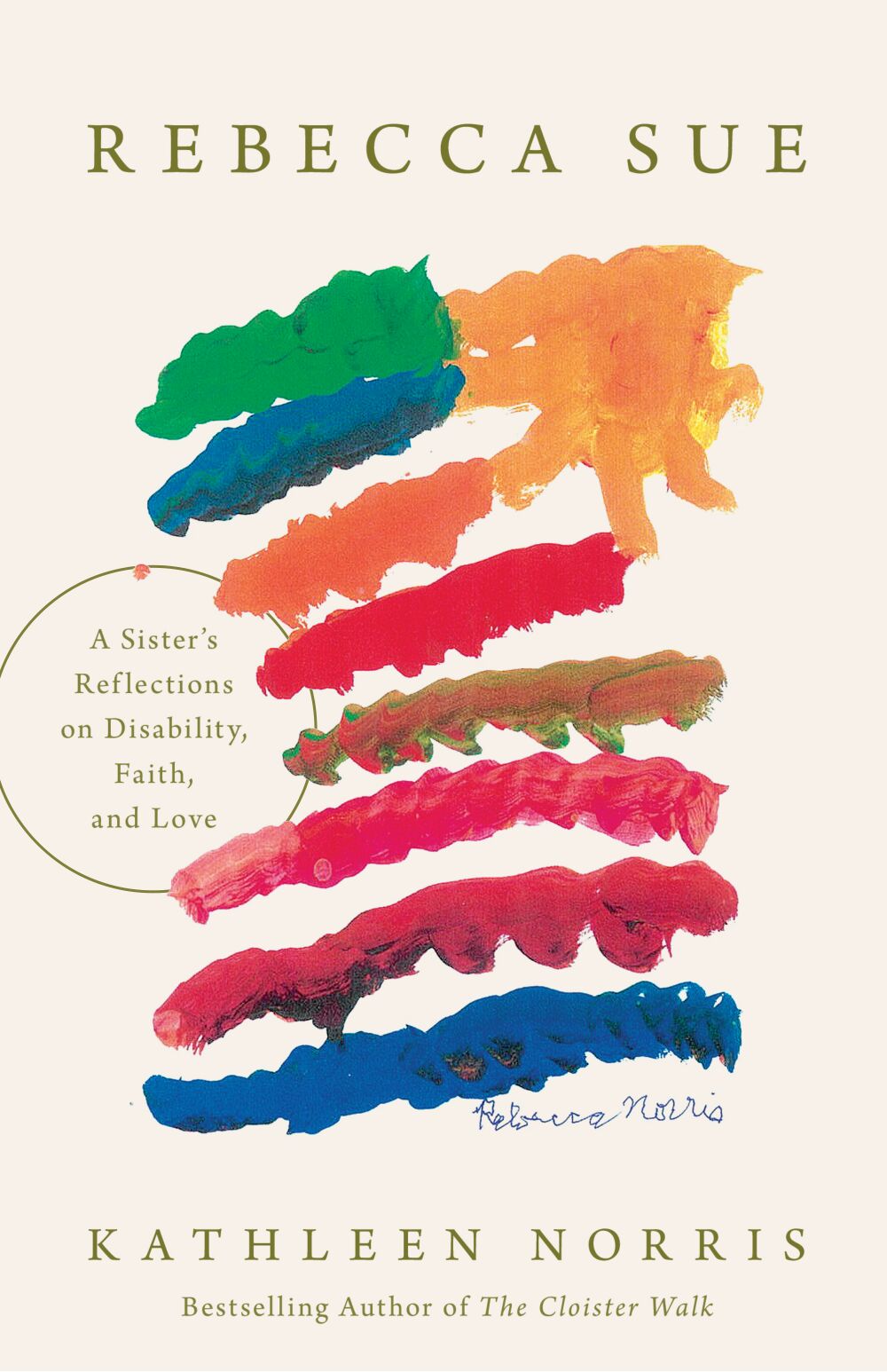
Writing Rebecca Sue took me deeper into my family story than anything I’ve ever done. This may be one reason it took me so long to accept that this was a book I needed to write. Telling my sister’s story meant telling my own, sorting through childhood memories, and acknowledging my self-absorbed adolescent self. Rebecca, born when I was five years old, suffered perinatal hypoxia, a lack of oxygen during birth that had caused brain damage. She was intelligent enough to know what had happened to her, which gave her a lifelong burden of regret. But her disability in no way defined her. She developed a strong, assertive personality, with a good dose of narcissism that protected her when she was called “slow” or “stupid.” As a young woman she struggled with being bi-polar, but the great joy of writing Rebecca Sue was recognizing that I was telling a story about the transforming power of love. My sister matured into a person of faith who, as she shed her protective shell of anger, realized that for people to love her all she had to do was to be herself.
When Rebecca told me, “You should write a book about me, so I can be famous like you,” I recognized it as a call. It’s been an honor to explore my relationship with my sister and try to present her in all her complexity.
An Interview with Kathleen Norris
What was Rebecca Sue’s most profound impact on your family?
Kathleen: As a child I treated Becky normally; that is, I regarded her as my little sister who often annoyed me. But I admired her persistence: when she was a toddler and learning to crawl proved too difficult for her, she took to scooting like a little rocket around the house. We all marveled at how fast she could get where she wanted to go.
My older brother and I knew that Becky was different, slower to learn things than we were, and that she often lacked common sense. Our parents didn’t need to remind us that this meant we needed to look after her. We didn’t think of this as a burden, but a necessity.
It was years before I discovered that my parents suffered from guilt over the circumstances of Becky’s birth. My mother regretted that she had not spoken up when she felt she was being overmedicated during labor, and my father regretted that he and mom had used a U.S. Navy hospital for the birth. He felt that the medical errors that caused Becky’s brain damage were less likely to occur in a private hospital.
But Becky was one of us; our family was the place where she knew she belonged.
What two or three lessons do you hope readers learn from your sister?
Kathleen: I hope that people will pay attention to what my sister says. I tried to include many quotes from conversations with her, to give readers an idea of who she was.
I hope that reading about my sister will remind people not to discount or ignore what “differently abled” people can offer. What she said often reflected her lack of the social filters that most of us employ as we learn to navigate the world. Becky’s honesty may have been naive, but it can also help us to reflect on the dishonesty of many of the social niceties we use to protect ourselves.
I’ve come to see Becky’s story as that of the holy fool, the person labeled as insignificant, who unwittingly exposes the folly of the world that’s assumed to be “normal.”
What do you hope readers learn about faith and disability through this book?
Kathleen: I hope readers will take away a sense of Becky’s firm faith in God—and especially angels—that helped get her through some of the roughest times of her life, when her bipolar disorder caused her to behave recklessly. When I think of the danger Becky put herself in as a young woman, the idea that angels were protecting her doesn’t seem at all far-fetched.
I also hope readers will take away a sense of how Becky’s intelligence so often countered her disability. Towards the end of her life she developed a kind of peace with that, and I believe this increased sense of a God who had always loved and cared for her.
About the Author
Kathleen Norris
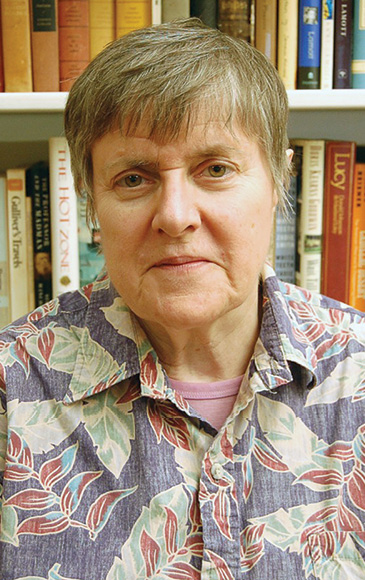
Kathleen Norris is the award-winning poet, writer, and author of the New York Times bestselling books The Cloister Walk, Acedia & Me: A Marriage, Monks, and a Writer's Life, Dakota: A Spiritual Geography, Amazing Grace: A Vocabulary of Faith, The Virgin of Bennington, and several volumes of poetry. Exploring the spiritual life, her work is at once intimate and historical, rich in poetry and meditations, brimming with exasperation and reverence, deeply grounded in both nature and spirit, sometimes funny, and often provocative.
Widowed in 2003, Kathleen Norris now divides her time between South Dakota and Honolulu, Hawaii, where she is a member of an Episcopal church. She travels to the mainland regularly to speak to students, medical professionals, social workers, and chaplains at colleges and universities, as well as churches and teaching hospitals. For many years she was the poetry editor of Spirituality & Health magazine. She serves as an editorial advisor for the monthly Give Us This Day from Liturgical Press, and writes for a weekly e-newsletter, Soul Telegram: Movies & Meaning with her friend Irish storyteller Gareth Higgins.


