

There Are No Ideal Families
Emily Hunter McGowin on a New Paradigm for Family in God’s Kingdom
The Christian world tends to have a blueprint for what families should look like, and these models of the family can be hard to live up to. In some circles, picture-perfect families are idealized and even idolatrized.
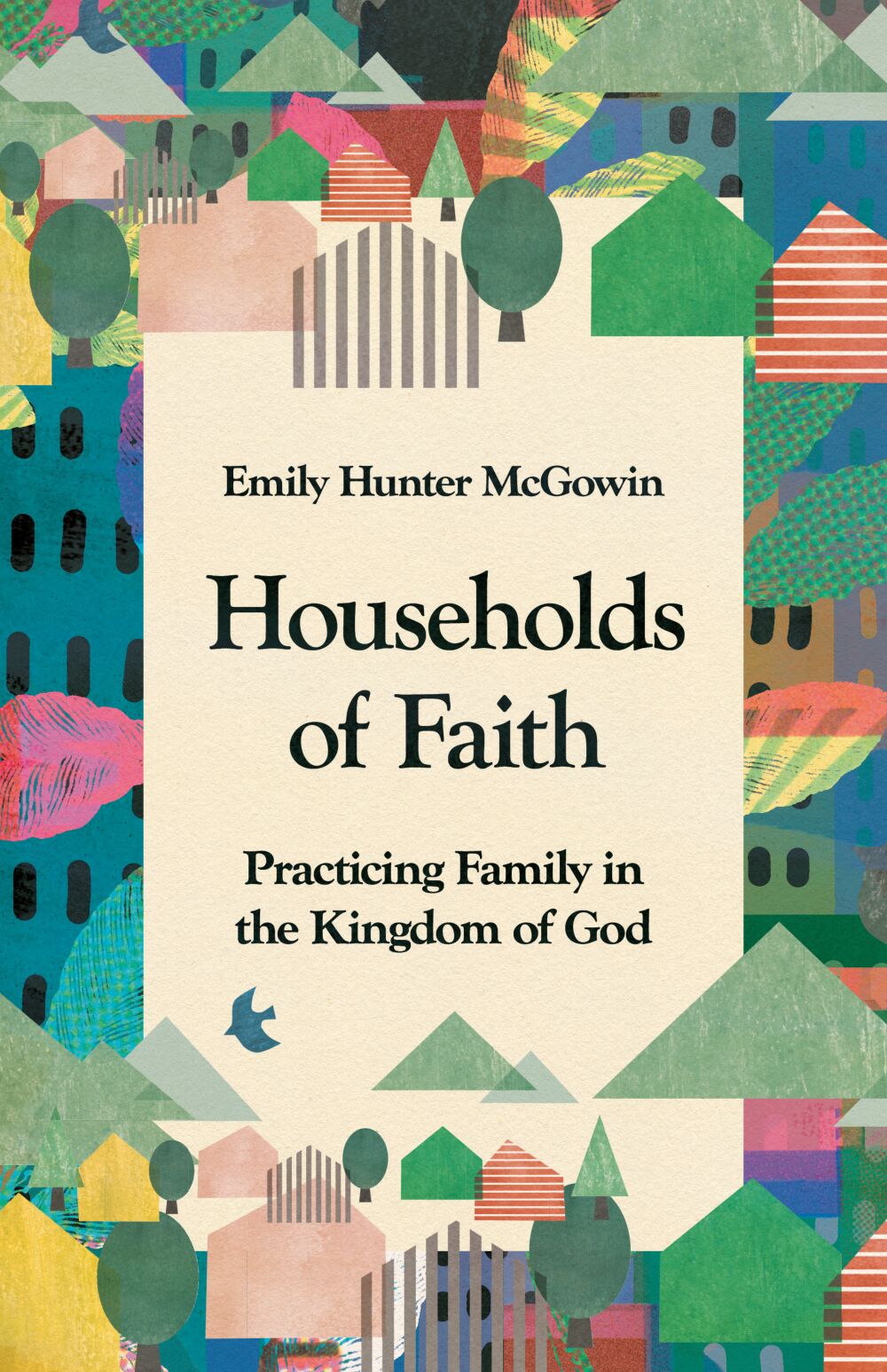
Theologian Emily McGowin casts a holistic vision for what family can be in light of God's kingdom. She says, “No matter what your family looks like—big or small, biological or chosen, with children or without, homeschooling or public-schooling, multiple incomes or one or none—ask the following together every morning:How will Jesus by his Spirit teach us to love today?”
There are no ideal families. And there are no families from nowhere. Families are made up of people with bodies. Such bodies bear the signs, seen and unseen, of age, gender, sexuality, racialization, class, disability, illness, and more. We are families shaped and powered by overlapping cultures, languages, and memories. And we are families living within spaces and places during epochs of time with specific histories. Whether we like it or not, these overlapping contexts have a significant impact on the lives of Christian households, including their ability to cope through trials and cultivate the kind of virtue essential to the Christian life.
Not only that, but the people who make up families have family histories of their own, along with the various experiences that their lives have given them. And Christian families take many forms beyond the oft-assumed nuclear family. Many kinds of Christian households exist, including single adults, single-parent families, couples with no children, divorced and remarried families with stepchildren, families headed by grandparents, and more. All these families with their complicated stories and challenges are the real-life households of God’s people. The kingdom of God and the church of Christ serve as the framework within which embodied, encultured, and historical families live—and all of them need to be empowered to be faithful witnesses to the kingdom of God today. The particulars of our histories and our present are precisely the things with which the Holy Spirit is working to make all things new.
The way you were parented, for instance, significantly shapes how you care for children, whether yours or someone else’s, many times in ways you aren’t aware of. A childhood marked by parental abuse can lead to difficulty in forming intimate connections, which makes forming a healthy family difficult. But the impact of a neighborhood or community on one’s family can’t be overlooked either. Think of the influence of something as simple as the zoning code on our daily lives, dictating where apartment complexes and gas stations can be built. Or the difference it makes for household members to be able to exercise flex time at work or to work multiple days from home. Things like ready access to sidewalks, green space, and fresh food have a massive long-term effect on a family’s health.
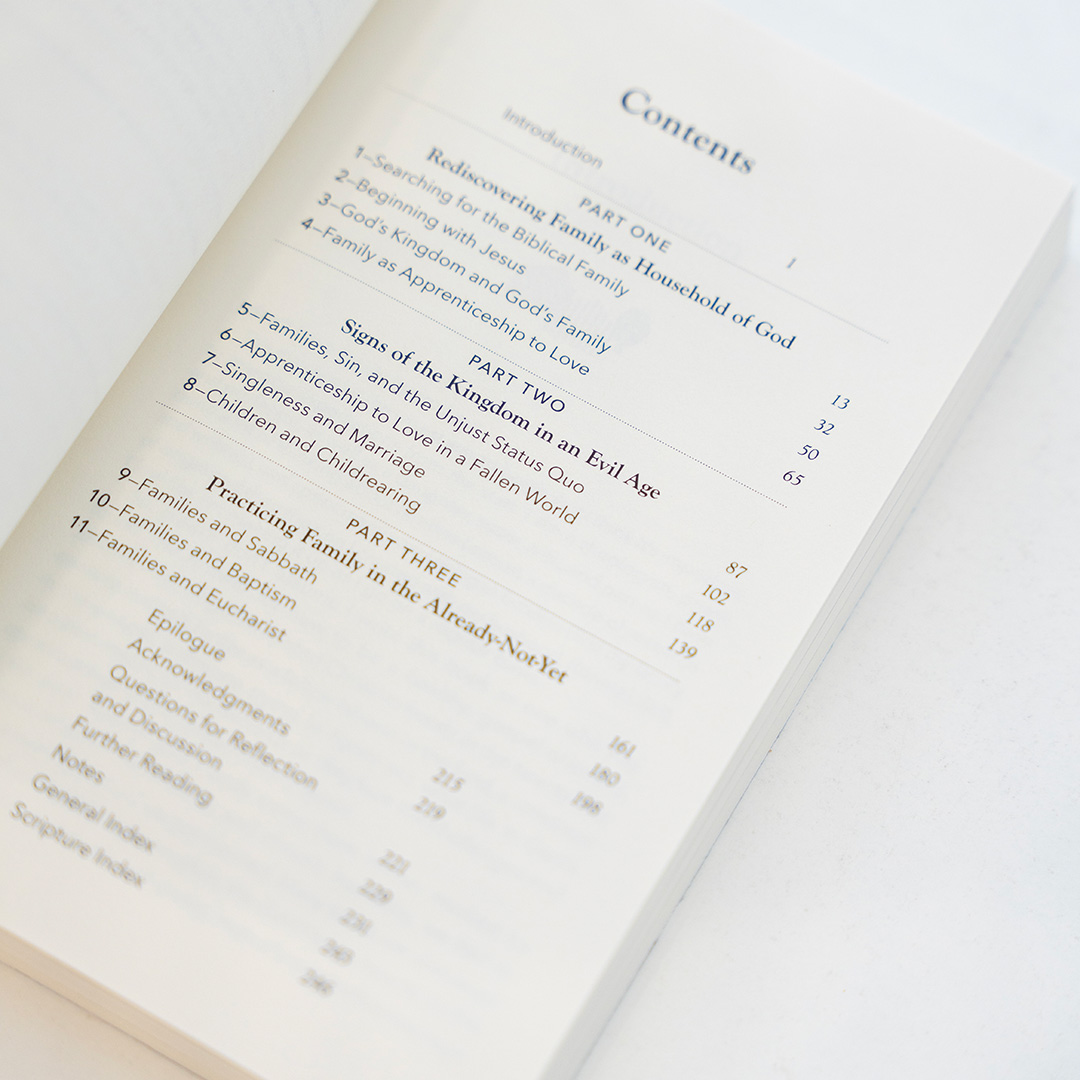
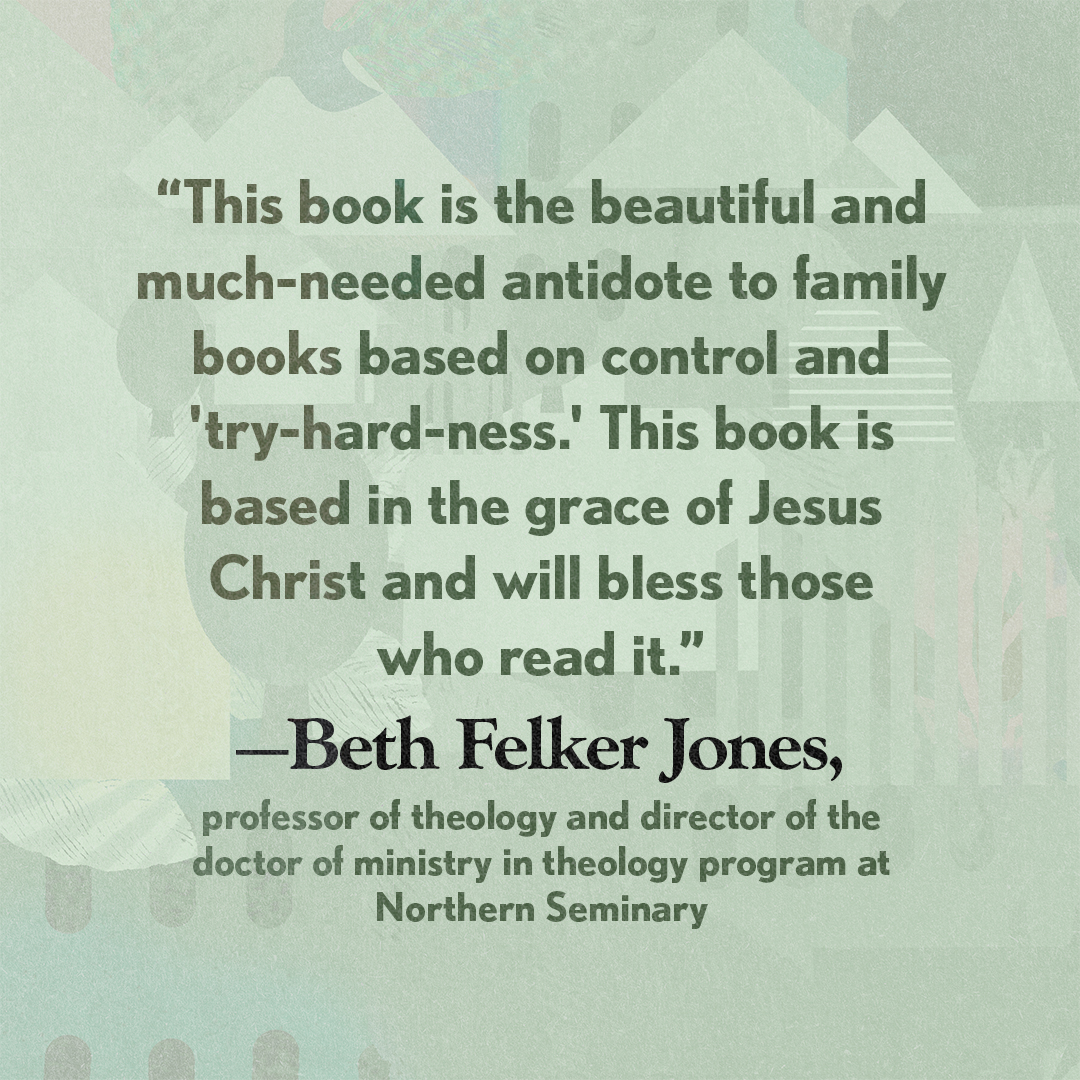
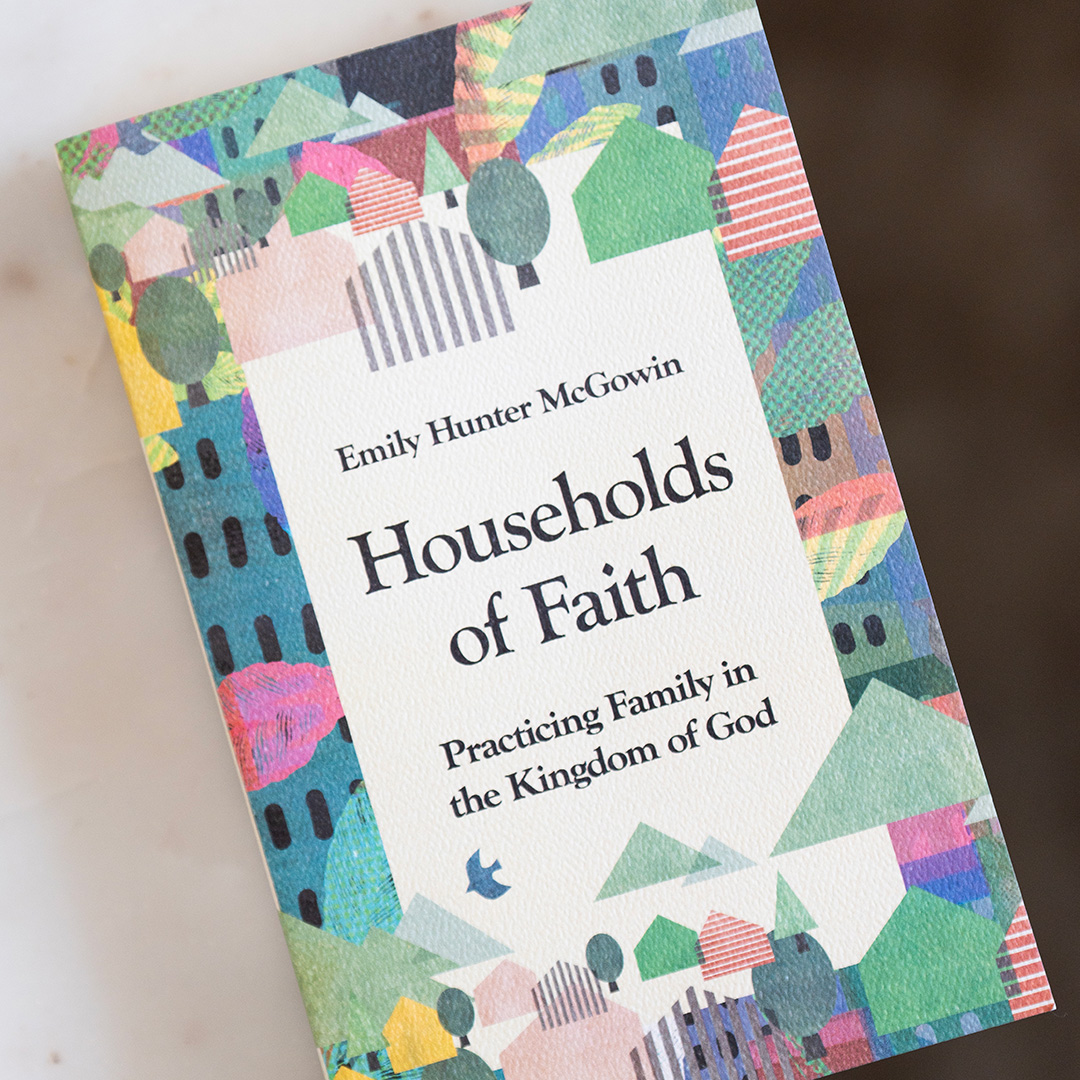
So much Christian talk about families deals in abstract ideals rather than embodied realities. Even framed within the church and the kingdom of God, Christian thinking about family must be rooted in real families living in the real world. Honoring this reality means naming and dealing with the many factors of our embodied contexts: jobs and schooling, recreation and chores, conflict and desire. These are not incidental things. They determine the vital, nitty-gritty stuff with which our households must contend every day. Because this is where God’s Spirit is at work—here and now in our lives as they actually exist.
Central to the good news of God’s kingdom is that God has come amongst us in Jesus Christ, the Messiah of Israel. The transcendent Creator of the cosmos has come near in the flesh-and-blood person from Nazareth under the reign of the Roman Empire. Jesus had an ancestry of his own, going back hundreds of years amongst God’s covenant people, Israel, and out of his people’s stories and practices, at the table of Mary and Joseph, he learned and grew.
Somehow God-in-the-flesh grew in wisdom and stature and favor with God and neighbor (Luke 2:52), and through his exemplary life, public torture, death, and victorious resurrection, he initiated the new creation foretold by Israel’s prophets. Gentiles, those outside the covenant people, have been welcomed in too. The sign of God’s universal welcome is the Holy Spirit, sent by the Father and the Son to unite all of us to God and each other.
The incarnation means the love of the triune God extends to particulars, as my friend Beth Felker Jones says—fingers and toes, kitchens and dens, porches and playgrounds. And if God’s love extends to such parts and places, then God’s transforming presence is found there too. The crucial task of Christian families is to learn how to see and know God (discernment) and live in the already of God’s kingdom (improvisation) amid the daily chaos of household life. I agree with American Catholic theologian Holly Taylor Coolman that the point of the Christian family in whatever form it takes is to be apprentices of love. As they learn how to love together, Christian families embody God’s kingdom in preparation for new creation.
Even though Ronnie and I are what I jokingly call “professional holy people,” we also lose sight of the big picture while trying to keep up with our responsibilities. It’s hard enough to feed our family, pay our bills, do our jobs, serve our church, maintain our friendships, and, somehow, get our kids prepared for adulthood, without also thinking about God’s kingdom too. And we’re doing all of this in an increasingly hurried and overstimulated world that is saturated with opinions. We live in the age of the expert, both the professionally affiliated and the self-proclaimed, and these experts have more and more outlets through which to spread their perspective on how things ought to be done. No matter the topic, whether it’s dating, fitness, personal finance, friendship, breastfeeding, nutrition, or sleep, there’s an expert, a book, a podcast, or a TikTok for that. Since most of us are not conversant in the relevant literature, we are, in many ways, at the mercy of news media, friends, and family who broadcast or share the opinions of others. While access to all this information can be an empowering thing, it can also be overwhelming. At every turn, families are often asking, Are we doing this right? Depending on who you ask, you can get a very different answer. The constant questioning creates a lot of anxiety and fear, which it so happens, is essential for selling the products and services.
At the same time, there’s no doubt that we live in perilous times. Human beings always have. Jesus himself said we should expect no less. Despite enormous progress in medicine and technology, humanity doesn’t seem any closer to overcoming our penchant for mutual destruction. Speaking in the 1960s, Dr. Martin Luther King, Jr. named our communal sin concretely as the three evils of society: racism, economic exploitation, and violence. While the rise of the internet, satellites, and smartphones have brought us many good things, there’s no doubt the three evils have continued in new ways in the present day. Choosing to live as Christian families within this environment, in whatever form our households take, isn’t for the faint of heart. Yet, Jesus’ calling “Follow me!” remains. We must do our best to discern what that means here and now.
Adapted from the introduction to Households of Faith by Emily Hunter McGowin. Copyright InterVarsity Press, 2025. Used with permission.
About the Author
Emily Hunter McGowin

Emily Hunter McGowin (PhD, University of Dayton) is associate professor of theology at Wheaton College. She is the author of Quivering Families and Christmas, and coeditor of God and Wonder. Her articles have appeared inChristianity Today and The Week. She is a priest and canon theologian in the Anglican diocese of Churches for the Sake of Others. She and her husband, Ron, also a priest, live in Chicagoland with their three children.


